I started 十角館の殺人 by Yukiko Ayatsuji… it’s a page turner! I’ve gone through day one (the first two chapters), and yeah, the story is really intriguing, I can’t wait to see how it will develop.
It reads very easily, I’m glad I started it!
@blog@social.inhae.blog
This account is for posting updates of the books I read and relay them to my blog. To me, it’s like a personal reading journal or a mini blog rather than social media. I don’t follow anyone from here, and I probably won’t accept follow requests.
I only post my personal opinion on what I read, and I don’t double check everything (names and all), these are just personal notes, nothing really worth reading.
310 posts 0 following 0 followers Joined Jun 17, 2024
I started 十角館の殺人 by Yukiko Ayatsuji… it’s a page turner! I’ve gone through day one (the first two chapters), and yeah, the story is really intriguing, I can’t wait to see how it will develop.
It reads very easily, I’m glad I started it!
It’s always interesting when a detective (police or private) is confronted with moral choices and has to interrogate the meaning of justice. They can solve the murder, but sometimes the murderer or criminal deserves to get away with it, and it would have been best if the detective had not intervened.
In 五人の子供, Kagami immediately sees through the staged murder and knows that the man has committed suicide to give the assurance money to his wife and five children. However, he decides to turn a blind eye and let this “murder case” unsolved.
The short story depicts how the war has thrown this family into complete poverty. But more than that, it insists on the presence of a kanjo letter (letter commending distinguished achievements during the war) in the family’s home.
The presence of this honorific letter in this shabby house, the fact that the country recognises the man’s service with a sheet of paper while his family has barely enough to eat… this affects Kagami a lot (and the reader).
ここに飢えて死にかけている六人の母子がいる。しかも、たった一枚の『感状』を壁にかけて...
これこそ、この日本の持つ、最も同情すべき犠牲をこうむった家庭の一つではないだろうか。
[…]
この戦争の、最も悲惨な犠牲者の一人がここにいた。
And later, when Kagami leaves the house:
唯一枚の、『感状』を壁にはった家…五人の子供......
加賀美は、吐息と一緒に、鈍い低い声で、呟いた。
「御主人は立派な人でした。」
Of course, it was only assurance fraud and not murder, the man was a good person who decided to sacrifice himself for his family. I wonder how Kagami would have reacted if it had really been a case of murder.
Both 黃髮の女 and 五人の子供 have been sad and dark short stories, but both have shown a part of Kagami’s personality that I didn’t know.
The plot in 黃髮の女 was a bit underwhelming in my opinion. The mystery of the hair colour did not lead to much in the end, and there’s almost no investigation. But obviously, it’s the end that matters, and I liked the resolution.
五人の子供 however both combine the same interesting ending, and it also shows Kagami’s great power of deduction. He basically discovers the truth without needing to investigate, just knowing the facts led him to the complete picture.
I finished 髭を描く鬼 by Kikuo Tsunoda (角田喜久雄). I found the title really intriguing, and the initial mystery was also very appealing.
The setting was reminiscent of the novel 『高木家の惨劇』from the same series. Inheritance and a common motive among all the suspects.
Unfortunately though, the mystery of the drawn moustache ended up being underwhelming in my opinion. I still enjoyed the short story, and as always, the end was surprising and very good. I would just have hoped that the moustache had more significance.
霊魂の足 - spoilers
I found the idea at the core of the mystery to be truly excellent.
The one who plotted the murder and the one who executed the plot were not the same person. Not only that, but the executor does not understand the plot at all! Just having two persons involved is already a good device and can allow a lot of interesting twists. But what is really great in this story, is that the person who executes the plan does not understand the purpose of each of the steps.
In other words, Kayo does not understand the purpose of the matches. If she had, she would have seen that Masaharu could not have been the intended victim: he is blind, so there was no need to use the matches trick on him. If she had realised that, things would have been different.
I’ve been very busy last week, so I didn’t take the time to update on this account, but I did finish the short story 霊魂の足 by Kikuo Tsunoda (角田喜久雄).
There’s one common trait that I tend to associate with the Kagami series, and that’s the use of tricks. Every time I think that they are too many, or just too complex and not realistic. They’re here for the enjoyment of the reader, and to thicken the mystery, but they also make the story unrealistic, especially 霊魂の足. I enjoyed reading it very much, but I feel like the murder is made too complex for the sake of a good puzzle, and I’m personally more invested in people’s emotions and motives (which there were a lot of in this short story - reason why I loved it so much).
This being said, all the stories I have read so far have surprised me in the end. The resolution of 霊魂の足 was so good! Things that didn’t make sense initially suddenly did. There was even something that I thought was a massive plot hole, but no, it was all part of the solution!
It’s also interesting to see that alcohol cleared his mind and helped him solve the case lol.
そうした状態での殺人を説明してる、唯一の場合がある。分るかね?こりゃア、僕の想像だが……いや、想像じゃアない。断然、推論だ。今、急に、はっきりとそれが分ってきたんだ。頭から、もやもやした奴がすっと消え去ってくれたんでね。アルコールのお陰だよ。素晴らしいねぇ、ビールという奴は……さア、君、乾盃!……
I thought that Keisuke Kagami being a heavy smoker was just to give some traits to the character (and a not particularly original one), but his habit of smoking actually helped him solve a case! The victim is also a smoker, and Kagami is certain that he must have lit a cigarette as soon as he stepped outside after a day’s work, which shows that a previous deduction was false.
これは、煙草喫みの間違いない真理だ!
So 脚 (きゃく) is the counter word for furniture with legs like a chair. How come I didn’t know that? Or maybe I learnt it and then forgot? Interesting… maybe I’m forgetting more words than I’m learning, in which case I’ll soon be back to beginner level. 
December reading goals. At this point I feel like I’m just moving the same list from one month to the other…
霊魂の足 加賀美捜査一課長全短篇 (Sogensha, 2021) by 角田喜久雄

십자가의 괴이
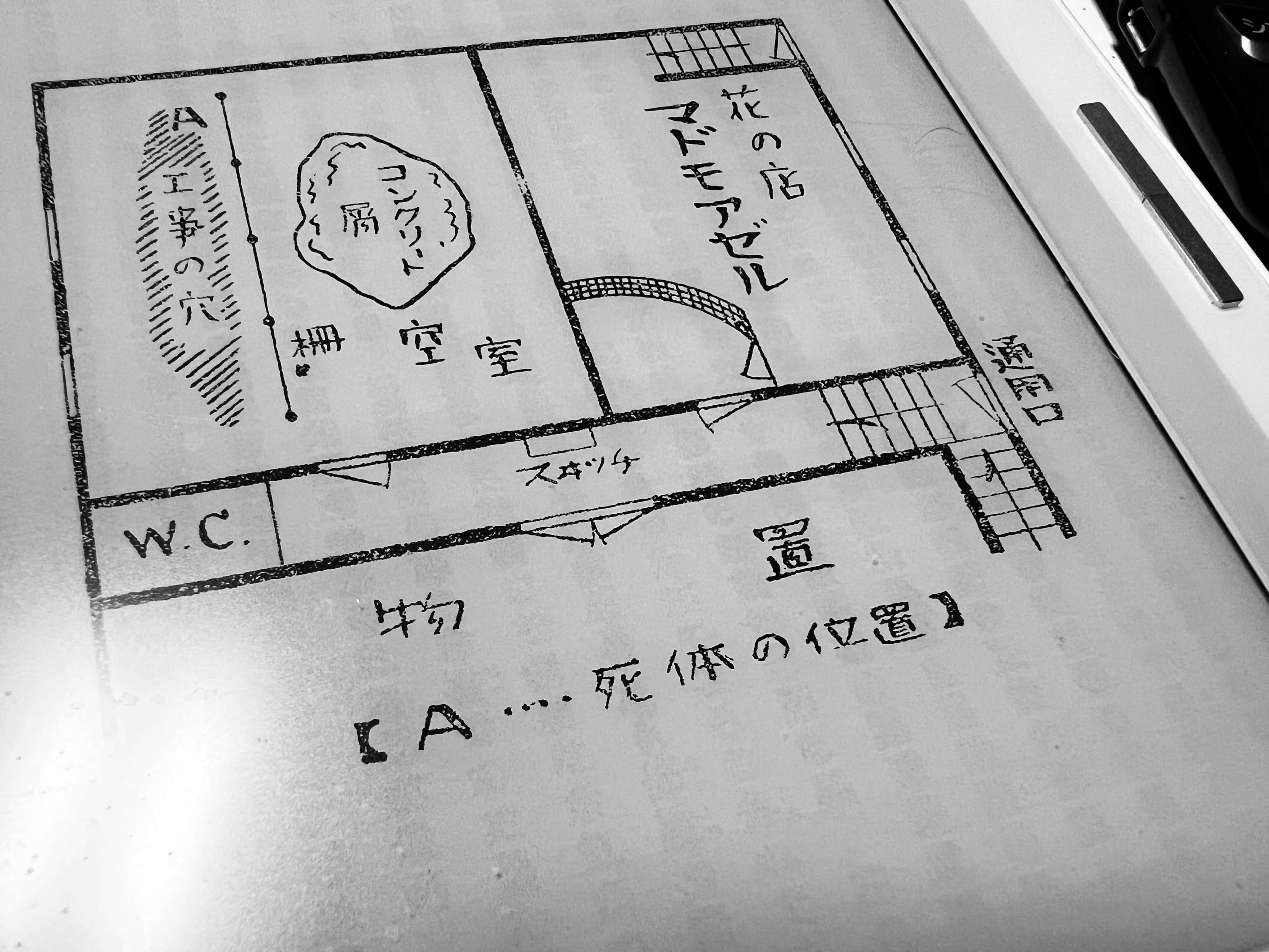
烙印 (Sogensha, 2022) by Udaru Oshita (大下宇陀児)
石の下の記録 by Udaru Oshita (大下宇陀児)
虚像 by Udaru Oshita (大下宇陀児)
Edit: Nevermind, maybe I’ll just read
十角館の殺人 by Yukiko Ayatsuji (綾辻行人). The Christmas period is a stressful time for me, you can’t really escape the festive season and it brings back bad memories. The short stories and novels published just after the war are a bit depressive too, so I’ll probably just take refuge in this classic of crime fiction.
Third short story in 십자가의 괴이 is 도적들의 십자가 by Jeon Gun-woo.
I saw the word 불가사의 and had to look it up. Hanja are 不可思議! I know this word in Chinese, it’s used a lot in Genshin dialogues. I should have thought more about the meaning before looking it up, especially because I know that 불가 is 不可!
I really love 霊魂の足 by Kikuo Tsunoda! I’m about halfway through and just went through the deductions of detective Izuno, and it was so great! These are both genial and obviously wrong deductions. Obviously, Izuno is in the wrong and Kagami will reveal the truth at the end, but for wrong deductions, they’re pretty good! Like it could be the solution if the story was a little unrealistic/far-fetched.
Kayo Ōtaki’s strong anti-war discourse when her son is taken to the police station. She first blames his two friends who have a bad influence on him, but then changes her discourse, realising that these two friends might also have been changed by their experience during the war.
The good son that turns bad because he is under the influence of “bad” friends is a common theme in crime fiction, but usually the friends are intrinsically bad. Here they are shown as victims as well, they’re “children”, and the only thing that is bad by essence, the cause of all the misfortunes, is the war.
あの子は、もとはいい子でした。本当にいい子だったんです。それを、あの外の二人のお友達が……いいえ、悪いのは、皆戦争のせいです。皆戦争がめちゃめちゃにしてしまったんです。あの子も、このお店も……私達で作った、折角の楽しいお店!あの子供達が帰ってきてから皆駄目になってしまいました。皆、滅茶々々になってしまいました。皆、戦争のためです!戦争のためです!戦争のためです!
There’s a scene just before this tirade that shows how the family’s perfect world has been shattered by the men’s return, but Kayo’s accusation with the repetition at the end has a much stronger impact than the previous scene.
EDIT: Nevermind… it turns out, Kayo never really thought the two friends were victims as well… she says at the end that THEY are the cause of all the family misfortunes, and we’re back to the usual trope: the two friends are bad and have corrupted the good son (at least, from the mother perspective):
あの人達がくると、とたんにこの店にーこの、私の大事な大事な店に、さっと暗いものがさしはじめました。日増しにどんどん悪くなってゆきました。何という、つらい、悲しい、憎むべきことだったでしょう。その上、あの人達が、不具の正春[Kayo’s son]を引きずりこみ、何か悪いことをたくらんでいるのが、私には、よく分るような気がしました。
Just saw the word アレキサンドリヤ and although it’s obvious from the context that it’s a fruit, I had no idea which one. I had to look it up, it’s a type of grape. 🍇
泉野: Izuno: 刑事課長 from the police station of N. and Kagami’s friend.
大滝加代: Ōtaki Kayo: Runs the Mademoiselle with her children.
隆平: Ryūhei: Kayo’s son, and eldest child.
マユミ: Mayumi: Kayo’s daughter and youngest child.
正春: Masaharu: Kayo’s second son.
服部吾ー: Hattori ?: Masaharu’s subordinate and friend during the war
石原門次郎: Ishihara Monjirō: Masaharu’s subordinate and friend during the war
Time to start the short story 霊魂の足 by Kikuo Tsunoda (角田喜久雄).
I don’t know if it’s a good idea, but I started the collection of short stories 십자가의 괴이, mainly because there’s one by Jeon Gun-woo in it (it’s from different authors). I should focus on finishing the Keisuke Kagami series (also a collection of short stories), but ok, I’ll try to read both at the same time, and hopefully finish them this month.
I finished a short story yesterday and a novel today, finally some progress in my readings!
I planned on finishing a collection of short stories in Japanese this month, then I thought I won’t be able to do it, but now I think it might be possible. I’m also motivated to start another book in Korean!
I finished 촉법소년 살인 사건 by 전건우! The whole novel is a page-turner with the last two chapters really accelerating the pace, making the book impossible to put down. Jeon Gun-woo is really the master of suspense.
There was nothing really new in this novel, from the discussions about the Juvenile Act and other plot devices, but it doesn’t matter. The book was engrossing and suspenseful, I liked how the plot unfolded and how fast the investigation progressed. Even though it tackles serious topics, the novel never gets pretentious, and it manages to discuss justice and law without slowing down the plot.
It’s the second novel (I think?) I read by this author. The other one is 불귀도 살인사건, and this one is just perfect, one of my favourite novels read in Korean, I heartily recommend it. I also read several short stories from various collections and loved them all, Jeon Gun-woo might just be my favourite Korean author of genre fiction!