@life@social.inhae.blog
I like learning languages and reading crime fiction, and my favourite thing is to read detective novels in the languages I’ve learned (Japanese, Korean and Chinese), so I mainly post about that + anything stationery, journaling, maybe cats (or fish?) and life in Korean sometimes.
395 posts 0 following 546 followers Joined Oct 20, 2024
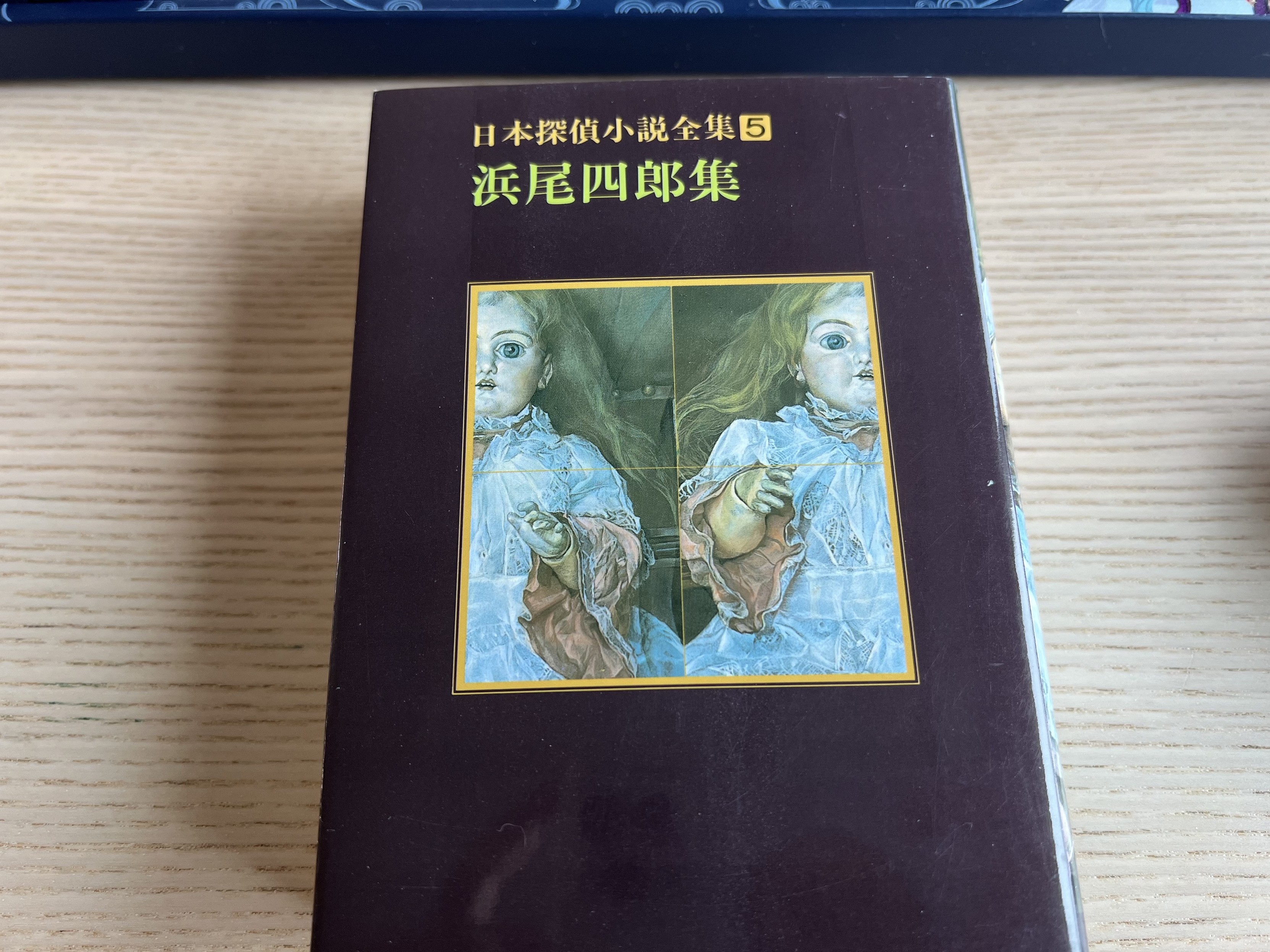
I’m taking a break in my exploration of Udaru Oshita (大下宇陀児)’s bibliography, and I’m moving on to Shiro Hamao (浜尾四郎) who was a prosecutor and lawyer (and of course, a writer of detective fiction). Volume 5 of the anthology contains 7 short stories and the novel 殺人鬼.
The book opens with Shiro Hamao’s debut fiction 彼が殺したか (1929).
Starting a new volume feels like a new beginning! This will be my main reading material for Spring 🌸
I started a new Korean book, a collection of horror stories by Jeon Gunwoo 전건우: 괴담수집가. The stories are very short, and the three I have read so far were vey good.
I love horror stories! Not as much as detective fiction, but still a favourite genre 
@apschmidt@sharkey.world
Ah oui c’est vrai… 😌
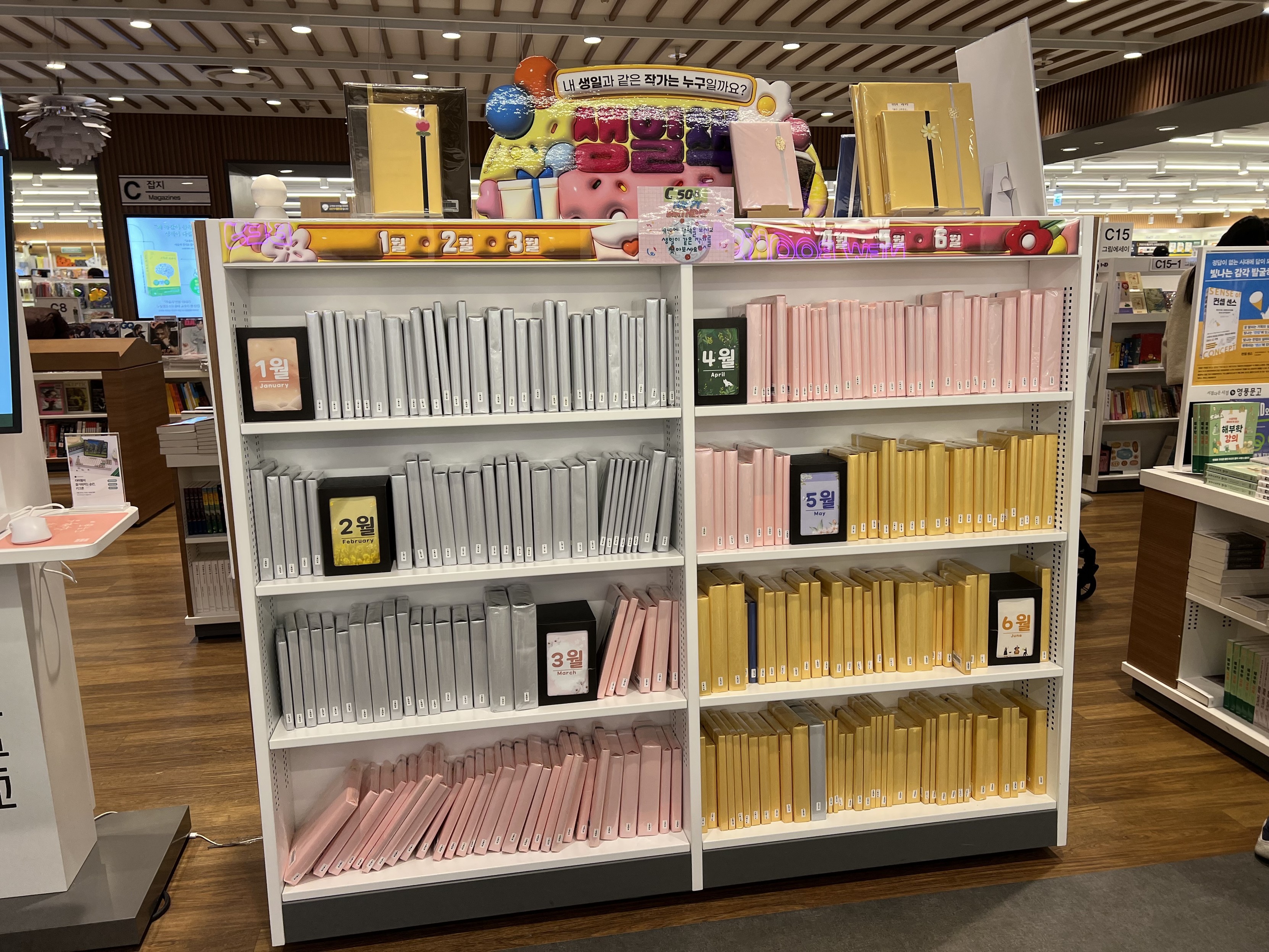
Saw this in a bookshop today. You can pick the date of your birthday, and the corresponding book will be by an author who shares the same birthday, but you don’t know which book it is. I find buying a wrapped book quite intimidating, so I didn’t go for it even though it was tempting.
(the other months were on the back side of the shelf)
@apschmidt@sharkey.world
Je vais faire de mon mieux! 😆
The weather is finally warmer, which means more cycling! I’ve recently switched to clipless pedals, and I’ve managed to fall twice since I got them :blog_fail: . No harm, just small bruises.
I can’t say I’m feeling a big difference, but it does look cool 🚴♀️
#cycling
@apschmidt@sharkey.world
Merci, contente d’être de retour!
Things I read while I was offline:
- the novel 虚像 by Udaru Oshita (大下宇陀児), which I absolutely loved and recommend. With this, I finished volume 3 of the anthology of Japanese detective fiction.
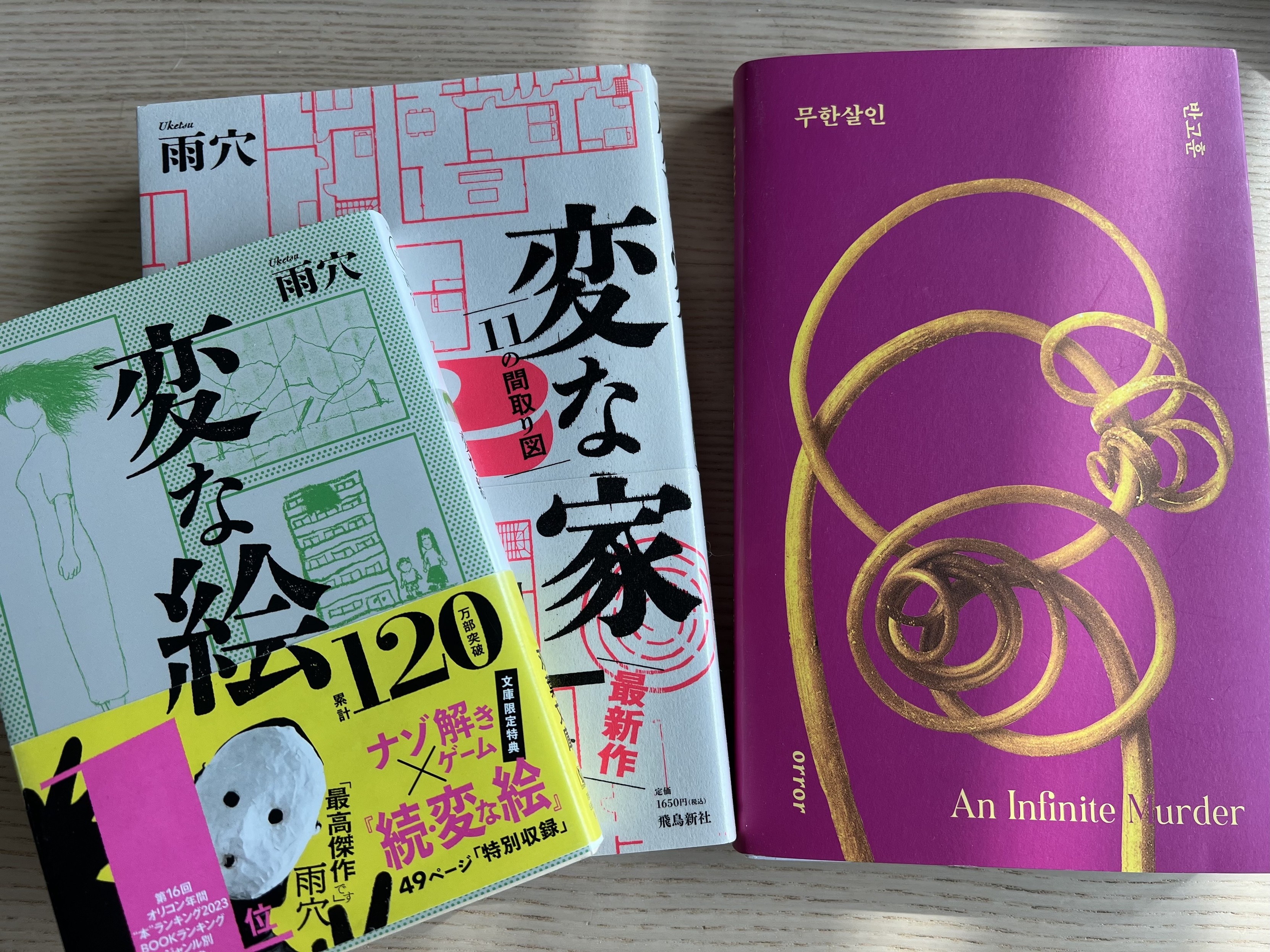
- I finally got around to reading 変な家2 by Uketsu (雨穴), and I found it so great that I immediately bought and read 変な絵. I’m glad that the Kyobo bookstore had a copy of the bunko format.
- I read the collection of short stories 무한살인 by 반고훈, I thought it would be a novel with a time loop mechanic, but it was only one short story with the time loop, the other ones were all good though, and not too difficult to read.
And I’m also back to reading in Chinese! I have a non-fiction book written by a forensic pathologist. I don’t usually read true crime, but it was the only crime-related book in the small Chinese bookshop I went to (they mostly have romance or translations of Korean novels).
I read in a short story that the arrival of the 赤紙 plunged a happy young couple into the bottom of hell, and so I learnt that during the war, draft cards were printed on red paper and commonly called 赤紙 (あかがみ).
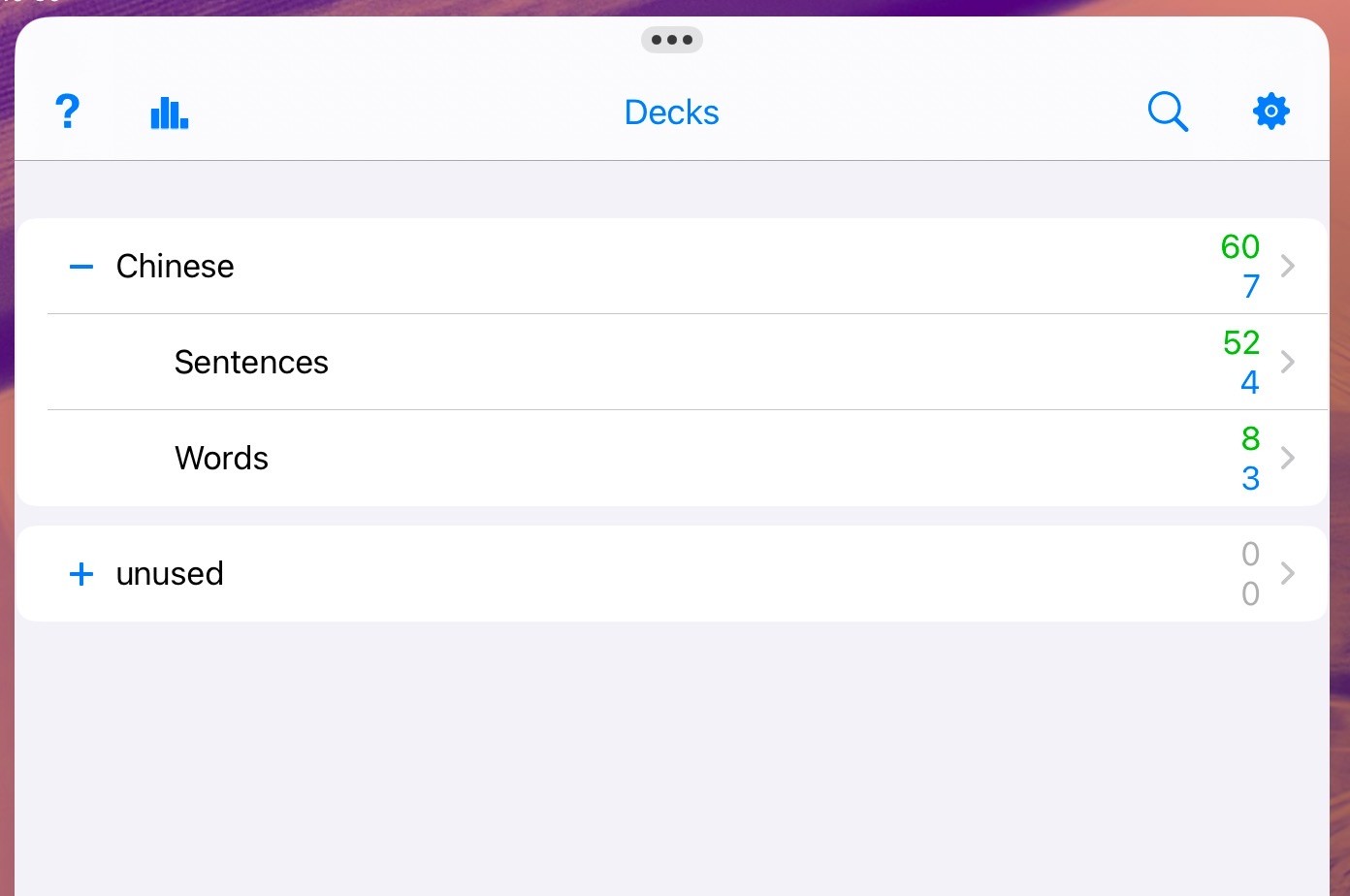
It works! I created two sub-decks for my main deck, I didn’t lose any progress or stats, and I can now set different amounts of new cards per sub-decks. Thanks @aesdeef and @apschmidt@sharkey.world for the suggestion!
@apschmidt@sharkey.world
I looked at the manual, it sounds easy to do! Much easier than repositioning each card manually…
@apschmidt@sharkey.world
Someone else just suggested this! I completely forgot we can create sub-decks 
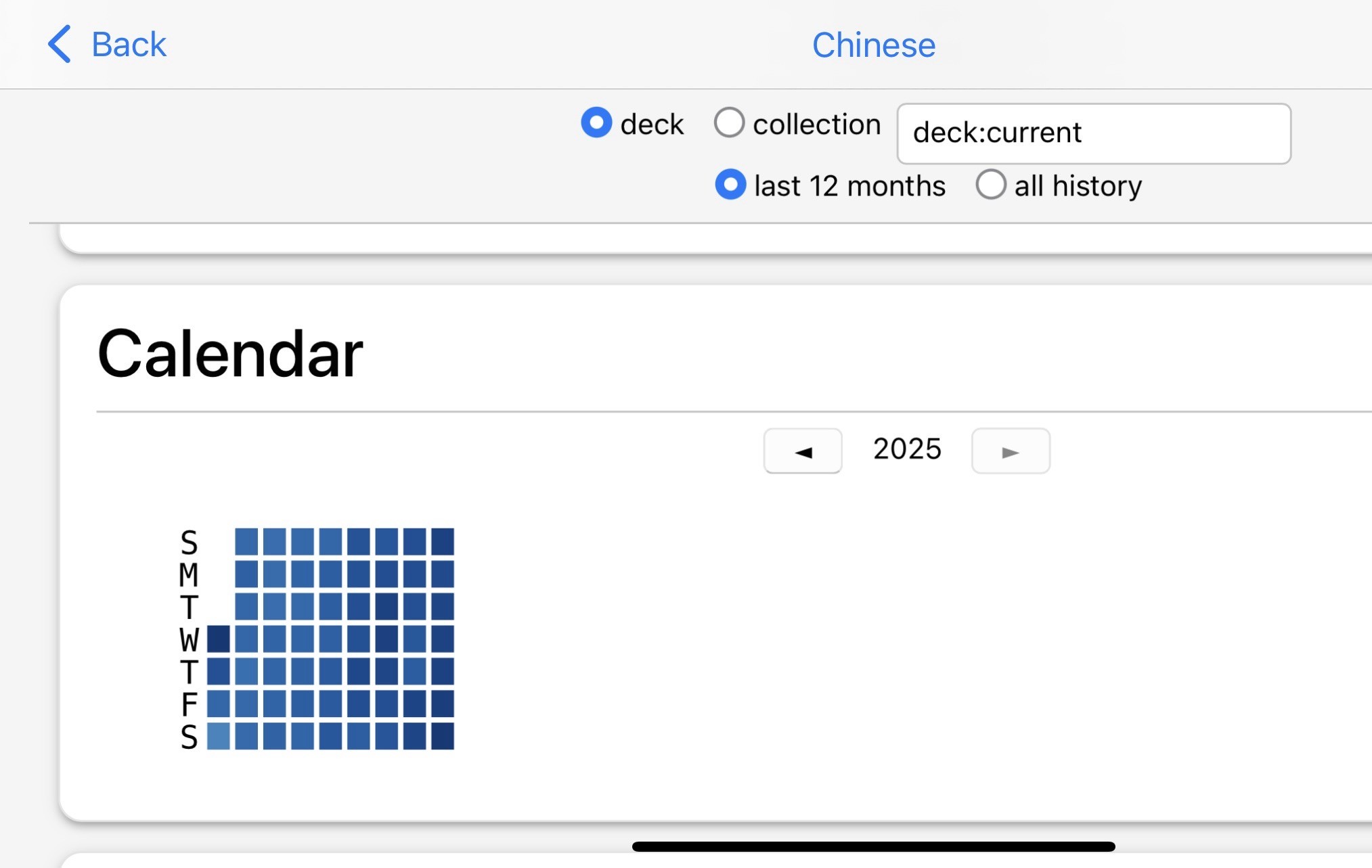
I’m completely obsessed with Anki at the moment, and I found another way to improve how I study with it!

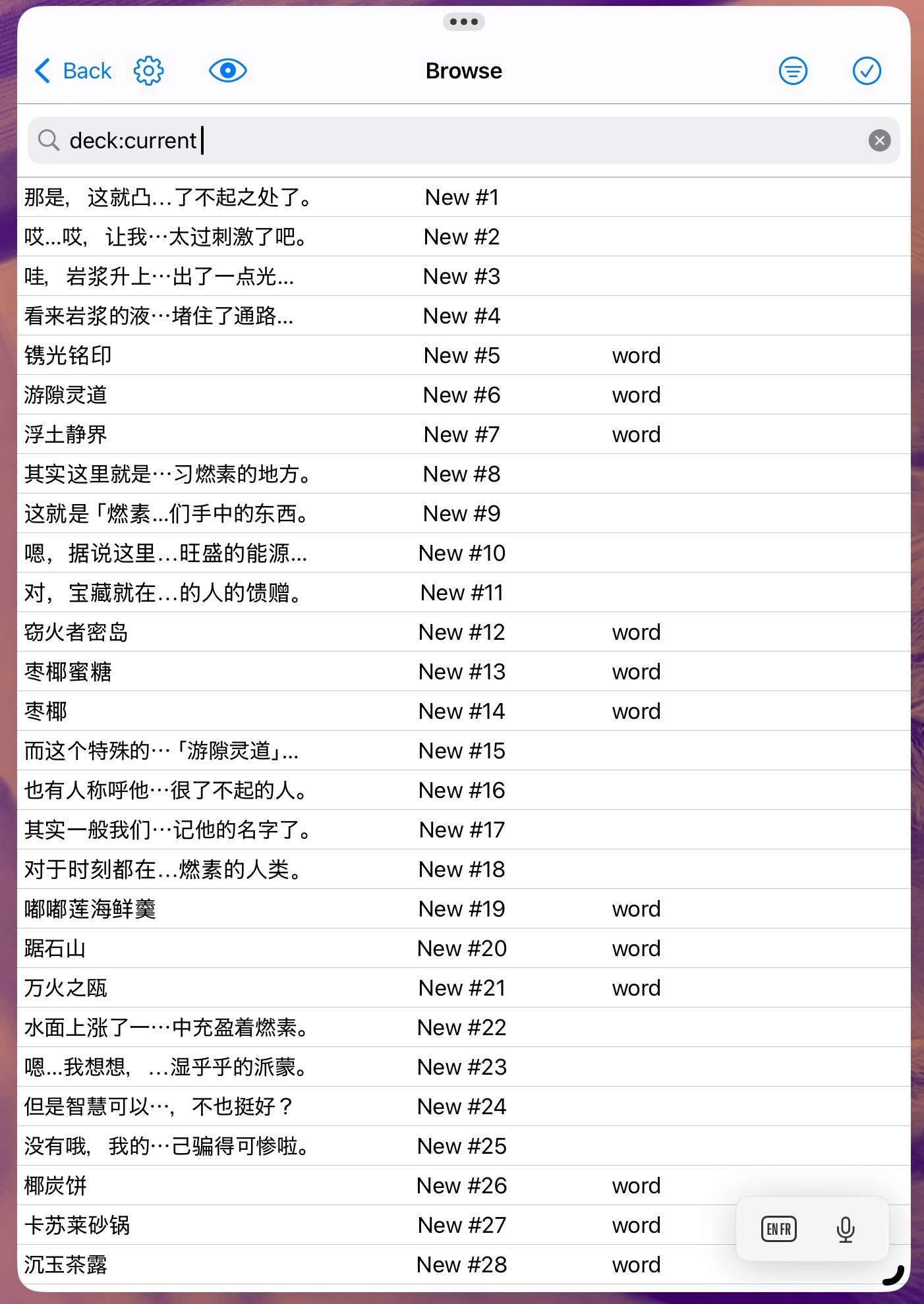
My Anki deck for Chinese has two types of notes. Most of them are sentences containing several new words, and some of them are single words (mostly fictional dishes, npc names, weapons and other game items).
I used to have five new cards per day, and I want to mainly work on the sentences because they are from game quests and I want to make progress on the story.

So if I add too many single words, it will dilute my new cards pool, I’ll see sentences less often, and it will slow down my progress on the different quests I’m working on. But at the same time, I want to learn all kinds of in-game items in Chinese because I find it fun.
I could increase the number of new cards per day, but sentences are more difficult than single words, and if I end up having 10 new sentences on a given day, it will be too difficult.

Ideally, I could tag my notes with “sentence” and “word” and tell Anki to give me 4 new sentences and 3 new words per day, for a total of 7 new cards.
Unfortunately, this seems impossible. I looked at all the settings, and I don’t think we can program new cards in this manner.

I did find a solution though! It’s a bit tedious to do, but it’s worth it, and the result is exactly what I wanted.
First I set the number of new cards per day to 7.
Then I browse my new cards and reposition them in the order I want to see them. First 4 sentences, then 3 words, then 4 sentences, etc.
So instead of having 5 new random cards (could be any number of sentences and single words), I now have a fixed number of each type every day.
It works perfectly well, it’s just annoying to do. If anyone has a better way to achieve this, please let me know!
The character 藏 has two pronunciations and meanings:
藏 zàng: storing place, depository
藏 cáng: hide, conceal
Things get tricky when we talk about hidden treasures
宝藏 bǎozàng: hidden treasure (also: precious mineral deposit).
藏宝箱: cángbǎoxiāng: treasure chest.
Funny that two words with similar meanings use the two pronunciations and meanings of 藏.